The 2026 CIO Guide: AI Voice Agents vs. Text Chatbots in Healthcare

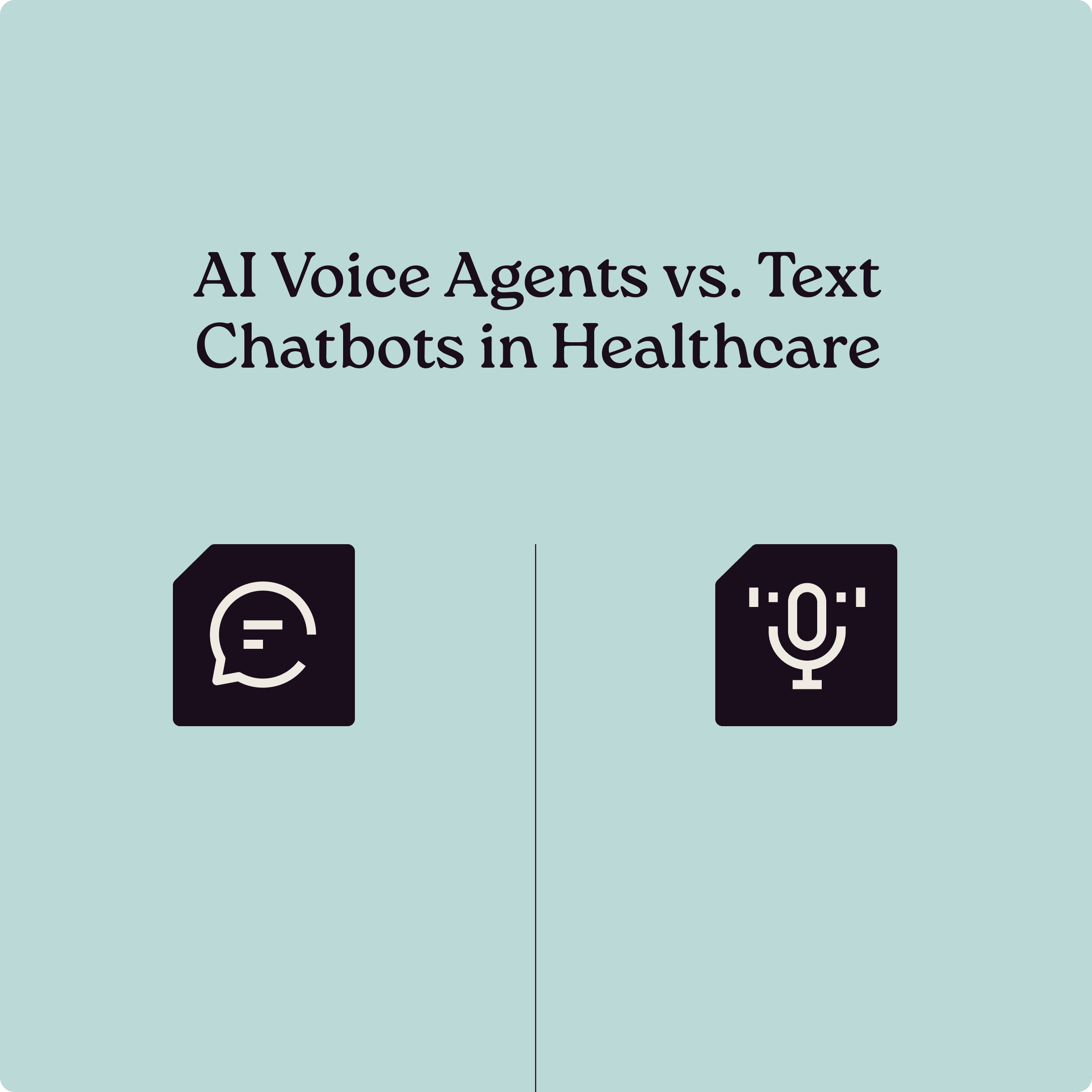
The 2026 CIO Guide: AI Voice Agents vs. Text Chatbots in Healthcare
The 2026 CIO Guide: AI Voice Agents vs. Text Chatbots in Healthcare
Executive Summary & Key Takeaways:
- The Paradigm Shift: Traditional ai patient engagement software (SMS and web chatbots) creates an "Illusion of Automation." They deflect simple queries but escalate complex scheduling to an already burned-out front desk.
- The Customization Gap: The failure of early healthcare conversational ai wasn't just the text interface; it was rigid workflow logic. Standard bots force clinics to adapt their operations to the software.
- The Voice Advantage: An autonomous ai voice agent in healthcare—powered by deep API integrations and true agentic reasoning—adapts to a clinic's proprietary workflows, resolving complex patient interactions end-to-end without human intervention.
1. The Core Dilemma: Deflection vs. Resolution
For the past five years, the baseline for automation has been text-based deflection. If a patient needed to confirm an appointment, they replied "Y" to an SMS. If they had a basic question, they used a rigid text widget on the hospital’s website.
Today, Chief Information Officers (CIOs) and medical directors are realizing that text-based bots do not solve the root problem: administrative burnout. Text bots lack the clinical reasoning to handle the "edge cases" that make up 80% of a clinic's daily call volume.
The Problem with the Standalone "AI Symptom Checker"
Consider the traditional ai symptom checker. A patient types their symptoms into a web portal at 11:00 PM. The bot gives a generic recommendation to "seek medical attention." The result? The patient still calls the clinic the next morning, waits on hold for 15 minutes, and repeats their entire story. The text tool provided information, but it failed to provide a workflow resolution.
2. The Shift to Agentic Voice: Beyond Rigid APIs
The dilemma between text and voice is fundamentally about Task Completion Rates. Patients in distress do not want to navigate rigid decision trees; they want to talk to a human—or an AI that sounds and acts exactly like one.
However, many early voice bots (like Hyro or Syllable) simply took the rigid logic of a text chatbot and added a voice layer. They connect to EHRs via API, but they map to static endpoints. If a patient conversation takes a complex tangent, the bot breaks.
Enter the Full-Stack Virtual Assistant
An advanced virtual assistant in healthcare like Puppeteer AI approaches integration differently. It combines robust, deep API connectivity with an Agentic Reasoning Engine.
- Dynamic Negotiation: Instead of a rigid "If A, then B" script, the agent understands complex constraints (e.g., "I need an earlier slot, but only with a female provider who accepts BlueCross").
- Deep EHR Actionability: It reads and writes directly to the EHR via API in real-time, autonomously booking slots, updating demographics, and managing cancellations.
3. The 2026 Evaluation Matrix: Text vs. Standard Voice vs. Agentic Voice
When evaluating conversational ai for healthcare, decision-makers must distinguish between legacy text wrappers, rigid voice bots, and highly customizable autonomous agents.
4. The "Hidden Cost" of Workflow Rigidity
One of the main reasons clinics hesitate to upgrade their ai patient engagement software is the fear that the AI won't understand their unique business rules. Every hospital has edge cases: Dr. Smith only sees new pediatric patients on Tuesdays, but only if they have specific insurance.
Competitors require exorbitant custom development costs to hardcode these micro-rules. Puppeteer AI is designed from the ground up for Hyper-Customization. Through intelligent API integrations, Puppeteer ingests your complex, proprietary business logic. It doesn't force your clinic to change how it works; it adapts to your exact operational DNA.
5. Final Verdict: Resolving the CIO Dilemma
The debate between text chatbots and standard voice bots is missing the point. Generalist ai for healthcare tools fall short because their underlying logic is too brittle to handle real-world clinical operations.
To achieve zero-wait-time operations, eliminate front-desk burnout, and provide a seamless patient experience, transitioning to a highly customizable, API-driven ai voice agent in healthcare is the definitive strategy. Puppeteer AI doesn't just manage patient engagement—it intelligently executes the work, exactly the way your staff would.
Let’s build your next care agent together
Get a 20-minute call with our team to explore how Puppeteer AI can support your clinical workflows with custom AI agents.


Last Articles




Real Usecases, Real Results
See how healthcare teams use Puppeteer AI to automate patient conversations, reduce workload, and deliver better care, from intake to reactivation.